June 11 – 14, 2026
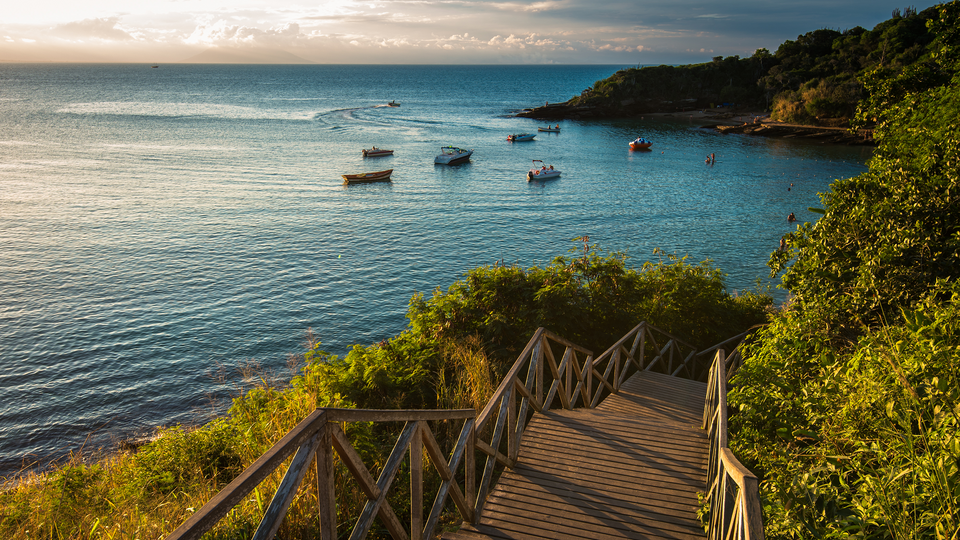
Buzios, Brazil
Join the AccelNet Toxo Network for a 4-Day Workshop in Buzios, Brazil focused on Toxoplasma at the human-animal-environment interface
Building on the first three Environmental Toxoplasma Workshops, we are excited to gather in Buzios, Brazil this June for a 4th collaborative workshop supported by an NSF AccelNet grant. Our AccelNet project brings together Toxoplasma research networks from across the globe to advance parasite ecology and transmission research at the human-animal-environment interface. This workshop will involve presentations, interactive planning discussions, field activities, and a hands-on data harmonization session to shape the path for our networks to collectively address critical knowledge gaps and research needs and to create shared strategies for communication, research collaboration, and partnerships. Registration has closed for this workshop.
Travel Fellowships
We were excited to be able to offer additional full travel fellowships to trainees or early career scientists to participate in this workshop. Travel fellowship applications have closed.
WORKSHOP AGENDA
Day 1 (Thursday, June 11)
Workshop opening and dinner/networking session: 7pm at Madame Bardot restaurant.
If you would like to walk over with a larger group, please meet by the Hotel Atlantico Pool at 6:45pm.
Day 2 (Friday, June 12)
Full day of indoor presentations and discussions to identify critical knowledge gaps and research needs and to create shared strategies for communication, research collaboration, and partnerships among networks.
09:00 - 09:30: Introduction to workshop: History of Environmental Toxoplasma workshops and AccelNet workshop objectives
09:30 - 10:20: Short presentations - Session I
Abigail Schoup - Kākahi and Conservation: Understanding Toxoplasma land-to-sea transmission using freshwater mussels as bioindicators in New Zealand rivers
Alinne Petris - Land-sea interface of Toxoplasma gondii: new detections in turtles and seabirds
Adrian Hernandez-Ortiz - Understanding Toxoplasma gondii in the Canadian Arctic
Jessica Triviño Valencia - Detection of Toxoplasma gondii in treated drinking water from the distribution network of Armenia, Quindío, Colombia, across different time periods
Israel Adrian Rios - Molecular detection of Toxoplasma gondii in raw or treated water matrices during professional or amateur sports competitions in southern Brazil
10:20 - 10.30: Introduction to Discussion I
10:30 - 11.00: Coffee break
11.00 - 12.15: Discussion I
12.15 - 13.00: Short presentations - Session II
Matt Knox - Developing detection, genotyping and analysis methods to unravel Toxoplasma infections in New Zealand wildlife
Vanesa Crisostomo Jorquera - Molecular epidemiology of Toxoplasma gondii in domestic cats and wild felids along coastal California
Maria Camila García Guerra - Predominance of archetypal Toxoplasma gondii Type I in free-ranging cats in a Nature Reserve in Mexico City
Natalia Velasco Jiménez - Study of natural outbreaks of Toxoplasma gondii -induced abortion in sheep and validation of early infection diagnostic biomarkers
13.00 - 14.30: Lunch
14.30 - 15.15: Short presentations - Session III
Thomas Mercier - Toxoplasma gondii and Mental Health
Aegla Papait Maldonado - Silent but dangerous: Gestational toxoplasmosis under 7 years of specialized clinical monitoring
Maxime Leclercq - Population genomic study of Toxoplasma gondii in South America
Martha Y. Salas-Fajardo - In vivo virulence of type III Toxoplasma gondii: Methodological challenges in a worldwide collection of isolates
15.15 - 16.00: Discussion II
16.00 - 16.15: Coffee break
16.15 - 16.45: Discussion II - Reporting
16.45 - 15.00: Overview of June 13th field activities (César Cordeiro)
Day 3 (Saturday, June 13)
Morning field trip: an exciting exploration of the local ecosystem and factors influencing Toxoplasma transmission at the human-animal-environment interface.
11:30 - 13:30: Lunch, discussion, and connections, Tartaruga Beach (transportation arranged for anyone unable to join the field walk)
ClinEpi/ToxoDB data harmonization session
14:30 - 15:30: Part I. Introduction to dataExplorer: an intuitive platform for data sharing and exploration
15:30 - 15:45: Coffee break
15:45 - 17:30: Part II. Demonstration and discussion of harmonized dataset integration and exploration
Day 4 (Sunday, June 14)
09:00 - 10.30: Discussion session III: The future of network coordination & large-scale collaborative research
10.30 - 11.00: Coffee break
11:00 - 12:00: Discussion III - wrap up and sharing
12:00 - 12:30: Exit poll and concluding remarks